Bench Test: How US Repair Shops Decide Which Replica Sneakers Are Worth Saving in 2026
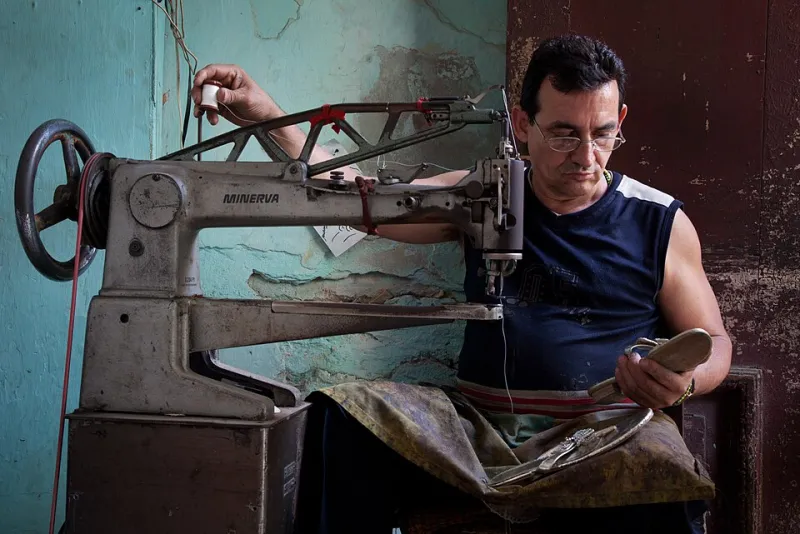
Photo: Jorge Royan, CC BY-SA 3.0, via Wikimedia Commons
A replica sneaker walks into a repair shop and the counter guy does not ask for a receipt. He asks for the shoe. He flips it over, presses a thumb into the heel, flexes the forefoot, and peers at the stitch line like he is reading a weather map. In 2026, that little bench test is happening more often across the US, because replica pairs are now a normal part of the rotation, not a secret tucked in the back of a closet.
The First Look Is Structural, Not Moral
Most independent cobblers and sneaker repair specialists say the same thing: authenticity is not the first question. Construction is. A shop can work with a clean sole bond, a stable upper, and stitching that still has material to grab. It cannot work miracles on foam that is already turning to powder.
'We do not authenticate shoes,' one Portland repair tech told Putian XS. 'We assess whether a repair will hold. If the midsole is crumbling, no glue on earth is going to save it.' That is the quiet verdict running through US repair benches in 2026. Replica pairs are judged less on origin and more on whether the materials will accept a fix.
What Shops Will Usually Fix
Heel drag is the most common walk-in repair. If the wear has chewed through the rubber outsole and into the foam, most shops will stop and recommend replacement. If the damage is still rubber-on-rubber, a heel drag pad or outsole patch is a straightforward save. Expect roughly $30 to $60 depending on the market and the shape of the wear.
Sole separation is another frequent fix. A clean split along the toe or sidewall can be reglued with proper adhesive, clamped, and returned to service. The key word is clean. If the separation is wide, curled, or spread around most of the perimeter, the repair becomes a re-sole job, and that is where the math gets ugly.
Stitching failures are repairable when the upper material still has integrity. A blown seam on a leather or synthetic panel can be restitched. A peeling synthetic upper that is tearing along multiple flex points usually cannot. Shops will tell you plainly: stitching is a repair, delamination is a replacement.
What Gets a Hard No
Crumbling polyurethane midsoles get refused. Hydrolyzed foam gets refused. Uppers that are peeling like sunburned skin get refused. The reason is not snobbery. It is liability. A shop cannot warranty a repair on a material that is already failing structurally.
One Midwest cobbler put it this way: 'I will glue a sole. I will stitch a seam. I will not rebuild a shoe that is falling apart in my hands.' That is the line replica owners should understand before they carry a pair to the counter.
The Money Math: Repair vs Replace
A basic reglue often runs $20 to $40. Heel drag pads run $30 to $60. Restitching runs $25 to $50. A full sole swap can hit $80 to $150 or more. Those numbers matter because replica pairs often cost less than the repair itself.
A useful rule from the bench: if the repair quote is more than 40 percent of what a replacement pair would cost, and the upper is not exceptional, replace. If the upper is solid, the issue is localized, and the fix lands under that threshold, repair. A $60 fix on a $160 pair with a good upper makes sense. An $85 fix on a $120 pair with a tired midsole usually does not.
A Shop-Floor Checklist for Replica Owners
- Heel drag: rubber wear only means a pad or patch is possible. Foam visible means replace.
- Sole separation: a short clean split can be reglued. A long curled gap or multiple open zones means replace.
- Stitching: one blown seam can be restitched. Several failing seams plus thinning material means retire.
- Midsole wear: surface scuffs are cosmetic. Compression lines are a warning. Cracks and crumbling mean replace.
- Flex point: if the shoe bends like cardboard or leaves a crease that stays white, the foam is done.
Why Replica Pairs Split the Bench
Some shops treat replicas like any other sneaker. Others are cautious because the material spec is unknown. In 2026, the more useful conversation is not about legitimacy but about glue, foam, and whether the repair will last a season. US sneaker culture has been moving toward repair and rotation anyway, and replica buyers are part of that shift.
The honest verdict: ask whether the shoe is repairable, not whether it is real. If the upper is sound and the problem is local, a shop can help. If the foam is gone or the quote approaches replacement cost, let it go. The bench does not lie.