How the Hundred-Dollar Rotation Became American Sneaker Culture’s Quiet Default
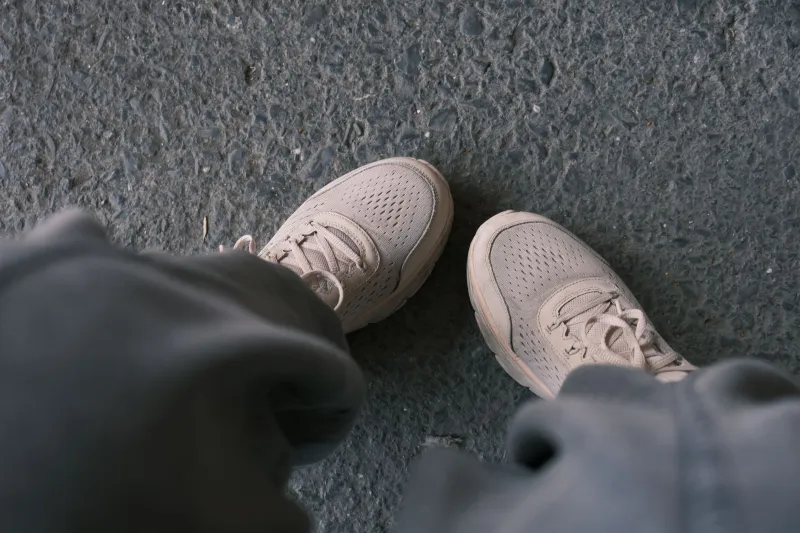
At Putian XS, we spend a lot of time watching what people actually wear, not just what drops. And in 2026, the most interesting story in US street style is not a $600 resale grail. It is the $100 rotation: a handful of replica pairs that get mixed, beaten up, and reworked until they feel like a personal uniform. You see it on the L train, outside a warehouse show in Los Angeles, at a college tailgate in Atlanta, and on the long walk from the parking lot to a Sunday flea market. The sneakers are not precious. They are practical, expressive, and increasingly central to how American sneaker fans dress.
The Rotation Replaced the Grail
For years, the culture treated the single grail purchase as the finish line. Save up, hunt the pair, post the receipt, wear it twice, protect the box. That model still exists, but it no longer describes how most young sneaker fans actually build a wardrobe. A graphic designer in Chicago tells us she keeps four pairs in rotation: a chunky runner, a low court shoe, a trail-inspired sneaker, and a black canvas beater. Three of the four are replicas. The total cost is less than one hyped resale pair from a few seasons ago. That math has changed behavior.
The rotation is not just a budget hack. It is a styling system. When you have multiple silhouettes, you stop asking one shoe to do everything. A bulky runner can handle wide-leg denim and a fleece. A slim court shoe cleans up a pleated trouser or a cropped jacket. A trail shoe gives a little grit to an otherwise simple outfit. The replica market has made that range accessible to people who cannot spend a rent payment on footwear. In 2026, that accessibility is the backbone of a lot of US street style, whether the wearer admits it or not.
High-Low Is the Whole Point
The strongest outfits in 2026 are not head-to-toe designer or head-to-toe replica. They are high-low collisions. Think a replica tech runner with vintage Levi's and a Uniqlo airism tee. Or a low-profile replica court sneaker with Carhartt double knees and a thrifted leather jacket. The shoe is the accent, not the entire personality. That is a healthy shift. It puts more weight on proportion, color, and silhouette than on logos.
This is where replica pairs have an advantage. They let people test a shape before committing to it. A loud silver runner might be a one-season experiment, not a five-year investment. A weird lacing system might look great with parachute pants and terrible with everything else. The $100 threshold makes those experiments feel reasonable. It also makes color more democratic. You can own the neutral pair and the oddball pair. That is how rotations get interesting.
The Trade-Offs Nobody Posts
It would be easy to frame all of this as a win for accessibility, but the replica boom has costs. The original designers and brands still set the template. When a replica pair sells well, the creative credit rarely travels back to the people who made the silhouette matter. There is also a quality lottery. Some replica pairs are solid daily wear. Others look right in photos and fall apart after a rainy week. The rotation model hides some of that risk because no single pair is carrying the whole closet, but it does not erase it.
There is a cultural trade-off too. When everyone can access every colorway, taste can flatten. The same three silhouettes show up in every feed, styled the same way. The antidote is not gatekeeping. It is actually wearing the shoes. Scuff them. Swap the laces. Pair them with something that does not match the algorithm. The replica market can resurrect a silhouette, but it cannot give it personality. That part is still on the wearer.
What the $100 Line Actually Means
A hundred dollars is a psychological line in the US sneaker market. It is close enough to a new mainline pair to feel familiar, and far enough from resale prices to feel like a loophole. In 2026, that line is shaping how fans think about value versus hype. The question is no longer “Is this the hottest shoe?” It is “Does this shoe earn its space by the door?” If a pair can work with three outfits and survive a commute, it has a better case than a grail that sits in a box.
That is the quiet argument of the $100 rotation. It treats sneakers as clothing, not trophies. It rewards range over scarcity. It lets US street style stay playful in a year when everything feels expensive. The trade-offs are real, and the replica market is not a clean win. But the rotation is here, and it is doing more for everyday style than another sold-out drop ever could.