The Resale Breakup: Why US Sneaker Sellers Are Quietly Leaving the Big Platforms
Sunday Morning in a Parking Lot
There's a strip mall outside Charlotte where, most Sunday mornings, a dozen people stand around open trunks. Nothing dramatic. A folding table, a few pairs laid out on a moving blanket, a guy with a scale checking weight on a box. Someone hands over cash, someone else laughs about a lowball offer, and a pair of sneakers changes hands in about ninety seconds.
Five years ago this scene would have felt like a step backward. In 2026, it reads as a correction.
The big resale platforms still move enormous volume. But among the collectors and casual buyers who make up the long tail of US sneaker culture, the default has shifted. The question is no longer where do I list this — it's who do I actually trust with it.
What Broke the Default
The complaints aren't exotic. Sellers talk about fee structures that eat the margin on anything under a certain price. Buyers talk about authentication queues that stretch a three-day purchase into a two-week wait. Both sides talk about the same thing: a transaction that used to feel like a handshake now feels like filing paperwork with a middleman who has never touched the shoe.
Add in the broader squeeze on discretionary spending and the math gets ugly fast. When a $180 pair nets the seller $140 after fees and shipping, and the buyer pays $205 with tax, the spread stops making sense for anyone who isn't moving volume.
So people started moving volume elsewhere.
The New Middlemen Are Smaller — and Stranger
The replacement layer isn't one thing. It's a patchwork:
Local meetups and swap events. City-run sneaker swaps, bar takeovers, and informal trunk meetups have filled the gap. The appeal is obvious — you see the shoe in hand before money moves, and there's a room full of witnesses.
Instagram and Discord sellers. Many are part-time, running a few pairs a month out of a closet. The good ones have built reputations over years of granular, repetitive posting: date cards, receipts, tagged photos, a visible history of satisfied buyers.
Livestream selling. Auction-style streams have become a genuine channel, especially for mid-priced pairs. The energy of a live room does some of the trust work that a product page can't.
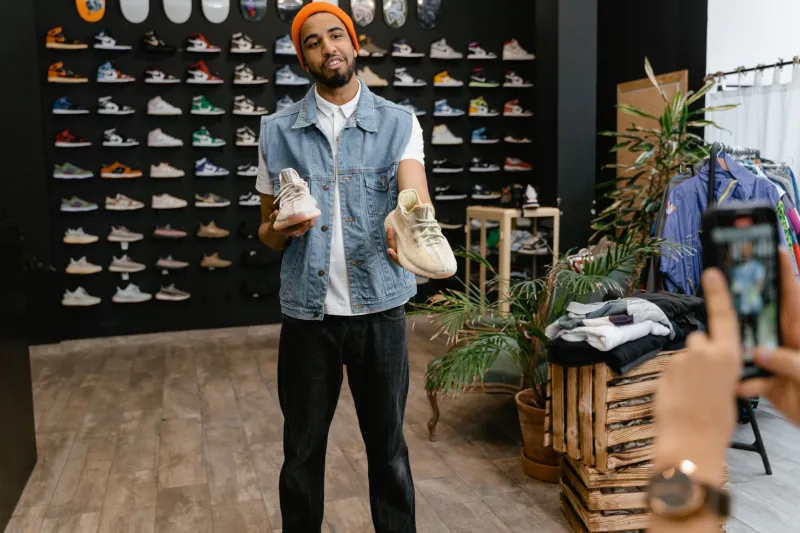
Small consignment shops. Physical resale storefronts have quietly multiplied. You pay a premium for the shelf space and the fact that someone with a reputation on the line already vetted the pair.
Niche marketplaces. Category-specific apps and forums for particular silhouettes or eras, where the moderation is tighter and the audience actually knows what they're looking at.
Authentication Became a Group Project
Here's the genuine upside of fragmentation: verification got more social. Legit-check threads, side-by-side photo comparisons, and community-maintained reference libraries mean a buyer can now get four opinions from people who own the shoe in about twenty minutes.
That's not a guarantee. Crowdsourced authentication has its own failure modes — groupthink, confident amateurs, and sellers who know exactly which angles to hide. But an imperfect second opinion still beats no opinion at all, which is what most buyers had a decade ago.
The practical skill now is knowing whose opinion to weight. Someone who posts fourteen detailed comparisons a month is worth more than a commenter who says "looks good bro" on everything.
Pricing Got Weirder — and Sometimes Fairer
Fragmented markets are inefficient markets, which cuts both ways. The same pair can be $150 in one Discord and $230 in a shop two miles away. Buyers who do legwork get rewarded; buyers who don't get taxed.
One consistent pattern: prices on the local and niche channels tend to cluster lower for mid-tier pairs and higher for genuinely scarce ones. Without a centralized comp sheet, scarcity reads louder than it used to.
Where the Risk Actually Lives
Let's be clear-eyed. Leaving the platforms means leaving the buyer protection. The risks that increase:
- Payment irreversibility. Cash and peer-to-peer transfers don't have a dispute button. Use goods-and-services where you can, and accept the small fee as insurance.
- Fake provenance. Screenshots of receipts are trivially replicated. Ask for the original order email in a live screenshot, or a video of the shoe with a date card.
- No-show meetups. Public, well-lit, camera-adjacent locations. Police station parking lots exist for this reason and nobody will think it's strange.
- Pressure tactics. Genuine scarcity doesn't need a countdown clock. Urgency is a sales tool, not a market signal.
The risks that decrease: misdescribed condition, because you're looking at the shoe, and slow payouts, because you're not waiting on anyone.
How to Move Safely in a Split Market
A short field kit:
- Ask for a live photo — something the seller couldn't have pulled from a folder, like the shoe next to today's date on a screen.
- Check the seller's history across platforms, not just the one they're selling on.
- Prefer channels with a real reputation cost. A shop that can lose foot traffic cares more than an account that can be deleted.
- Write down the agreed condition and price in the chat before meeting. Vague deals go bad.
- Bring a friend to meets. Not for security theater — for a second set of eyes on the stitching.
What Comes Next
The mega-platforms aren't vanishing. They'll keep serving the people who want a warranty and a tracking number, and that's a legitimate need.
But the center of gravity has moved toward smaller rooms with louder reputations. For US sneaker culture, that's less a collapse than a return to form — a market built on who you know, what you can verify, and whether the person across the folding table will still be there next Sunday.